
What is Dynamic Routing in Logistics? Static vs Dynamic Routing Explained
It is 9 AM, and your trucks leave the depot on the static routes you planned. By 11 AM, traffic, weather, and urgent orders disrupt the plan. This is where many logistics managers ask: What is dynamic routing, and how is it different from static routing?
Static routing follows a fixed path that is planned manually, and on the other hand, dynamic routing automatically sets the path based on real-time conditions. That’s the difference between static and dynamic routing, and it can make or break the delivery performance.
In this blog, we will explain what dynamic routing is and also the difference between static and dynamic routing. The blog will help you understand how dynamic routing helps fleets cut costs and improve customer satisfaction.
What is Routing in Logistics?
In logistics, routing is the process of deciding how vehicles move from one stop to the next. It’s about finding the best path to complete deliveries on time, with the least fuel and cost. A route can be simple, like a fixed path from a warehouse to a store, or it can be complex, like a dozen trucks making hundreds of deliveries across a city.
When a routing is done well, fleets can save fuel, complete more deliveries per day, and keep customers happy with on-time arrivals. But when the route fails, because of traffic jams, late-minute order changes, or vehicle breakdowns, costs can go up, and delivery promises are missed.
This is the reason why many modern fleets are moving from static routing to dynamic routing. Static routing is simple but rigid, while dynamic routing keeps adjusting based on traffic data, weather, driver location, and delivery priorities.
In the next sections, we will break down static and dynamic routing, highlight the difference between them, and explain how FleetronX makes dynamic routing simple for logistics managers.
Static Routing: The Old Way of Planning Deliveries
Static routing is the traditional way of planning routes for deliveries. This method used fixed routes that were created manually by logistics managers. Once the routes are planned, they rarely change depending on real-world problems like traffic, weather, or delivery priorities.
In logistics, static routing refers to the practice where trucks follow the same route every day. A simple example of this can be a grocery delivery truck that leaves the warehouse, follows the same order, and returns at the end of the day.
Limitations of Static Routing
Static routing has many limitations in today’s fast-moving logistics world.
- The routes planned cannot adapt to changes in the real world, like road closures, traffic, weather changes, etc.
- Missed ETAs lead to poor customer experience.
- Fuel usage increases when trucks get stuck in traffic.
These are a few reasons why shifting to dynamic routing for fleet management has turned out to be essential. In the next section, we will explore what is dynamic routing and how it helps fleets to become more efficient.
Dynamic Routing: Smarter Routes for Real-world Conditions
Dynamic routing is the modern way of planning deliveries. Unlike static routing, which used to follow fixed paths, dynamic routing uses real-time data to adjust routes and conditions when they change. This means your truck can take the fastest and most efficient route at any moment.
While talking about logistics, dynamic routing means smarter decision-making. In cases when there is a traffic jam, bad weather, or a last-minute order, the system automatically updates the route and sends it to the driver.
How Dynamic Routing Works
Dynamic routing uses live data from GPS, traffic updates, and delivery priorities. It finds the best route for every truck, even while they are on the road.
Example: If an accident blocks the main highway, the system reroutes the driver to an alternate road, reducing delays and improving ETA accuracy.
Advantages of Dynamic Routing
- Better ETA Accuracy: The route is adjusted instantly when conditions change.
- Lower Fuel Costs: Dynamic routing reduces congestion and idle time.
- Higher Fleet Productivity: Allows more stops in a single trip.
- Improved Customer Satisfaction: On-time deliveries, even with last-minute changes.
The difference between static and dynamic routing is that dynamic routing is flexible and efficient, while static routing is rigid and outdated. Understanding what are static routing and dynamic routing helps logistics managers choose the right approach for their fleet.
Difference Between Static and Dynamic Routing in Logistics
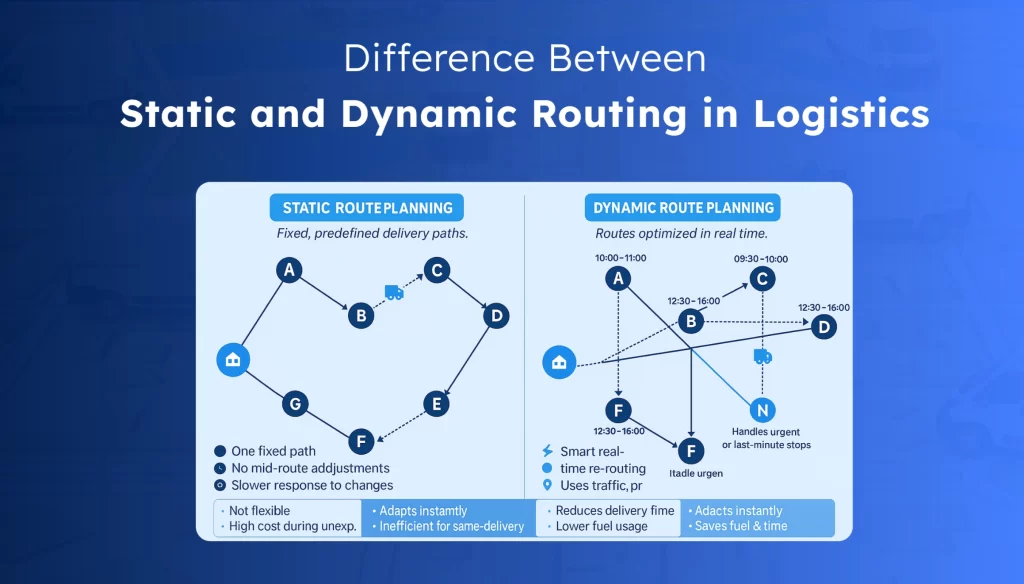
Many logistics managers are still unaware of the difference between static routing and dynamic routing. The difference is simple: static routing uses fixed delivery paths, while dynamic routing adjusts the routes in real time based on changing conditions.
Here’s a clear comparison to help you see the difference:
| Feature | Static Routing | Dynamic Routing |
|---|---|---|
| Route Planning | Fixed routes, planned manually | Routes adjust automatically using live data |
| Flexibility | Low – no changes after planning | High – updates instantly if conditions change |
| ETA Accuracy | Often inaccurate during disruptions | Highly accurate, adapts to traffic and delays |
| Fuel Efficiency | Lower, as trucks may sit in traffic | Higher, avoids congestion and reduces idle time |
| Scalability | Works for small fleets only | Handles complex, large-scale deliveries easily |
| Best Use Case | Simple, predictable deliveries | Dynamic, high-volume, or time-sensitive routes |
This is the difference between static routing and dynamic routing in simple terms: static routing is predictable but rigid, while dynamic routing is flexible and efficient. For modern logistics, where conditions change by the minute, dynamic routing helps reduce costs, improve ETA accuracy, and keep customers happy.
Why Dynamic Routing Matters for Modern Fleets
Logistics no longer revolved around moving goods from point A to point B. Today’s fleet has to deal with traffic spikes, last-minute orders, driver shortages, and rising fuel costs; all while keeping the customers informed and satisfied.
Relying on static routing in this environment can turn out to be risky and costly. Dynamic routing gives your fleet the ability to:
- React Instantly: When there is a change in the route because of the last-minute order or road closures, the system automatically updates the drivers without manual intervention.
- Make Data-driven Decisions: Every routing choice is backed by live traffic data, driver locations, and delivery urgency.
- Stay Competitive: Companies that use dynamic routing are capable of completing more deliveries in less time, keeping the trust of the customers intact.
How Dynamic Routing Improves Last-mile Delivery
The last-mile delivery is the most important part of logistics; it is when goods travel from the final hub to the customer’s doorstep. This is also the most expensive and the hardest to manage. This is also the stage where good routing can make or break delivery performance.
Static routing struggles with last-mile delivery because routes are fixed, and they can’t adapt when something changes. Also, the last-mile delivery is full of surprises because of traffic jams, last-minute orders, or a customer not being available.
Dynamic routing helps to solve these problems by keeping the routes flexible and up to date in real time.
How Dynamic Routing Powers the Last Mile
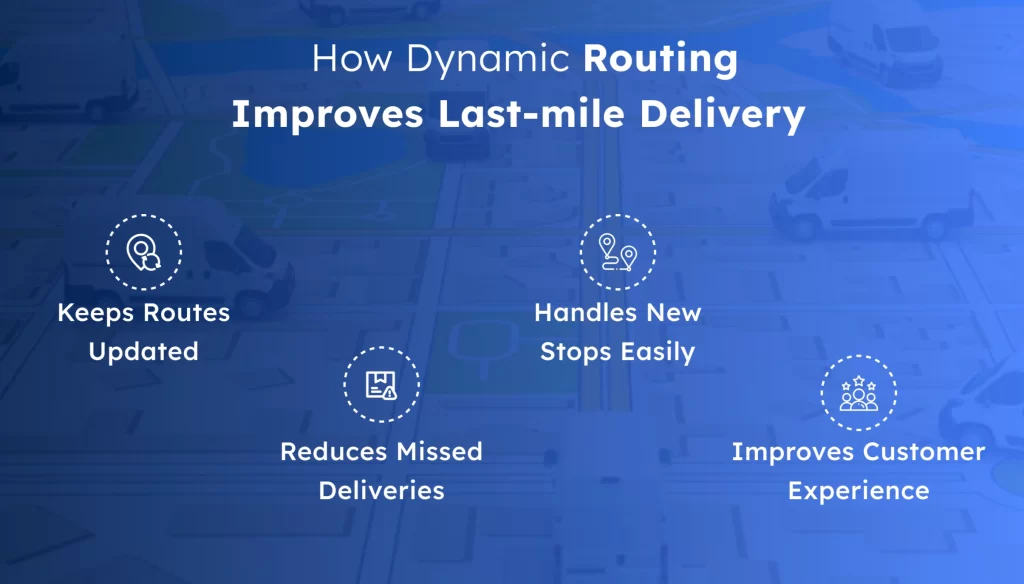
- Keeps Routes Updated: When traffic or delays happen, the system automatically helps in finding the faster path and also updates the driver instantly.
- Handles New Stops Easily: Last-minute deliveries can easily be added without messing up the whole plan.
- Reduces Missed Deliveries: Drivers can also easily adjust the routes to match customer time windows and avoid failed attempts.
- Improves Customer Experience: Accurate ETAs and faster deliveries that can be assured by dynamic routing can help to keep customers happy.
How FleetronX Makes Dynamic Routing Simple and Effective
Understanding what dynamic routing is one thing, and putting it to action is another. Many logistics teams know they need smarter routing, but struggle with complex tools or manual updates. This is where FleetronX helps to create a difference.
FleetronX is built for logistics teams that want easy, reliable, and real-time route optimisation. It takes up the complexity of dynamic routing and delivers clear, actionable routes to drivers within seconds.
What FleetronX Offers:
- Real-Time Route Updates: Routes automatically adjust to traffic, weather, and road closures.
- AI-Powered Optimization: Finds the fastest and most fuel-efficient paths for every vehicle.
- Easy Dispatch Dashboard: Managers can view all trucks, stops, and ETAs in one place.
- Driver Notifications: Updated routes are sent directly to drivers’ devices.
- Seamless Integration: Works with existing fleet management systems without heavy setup.
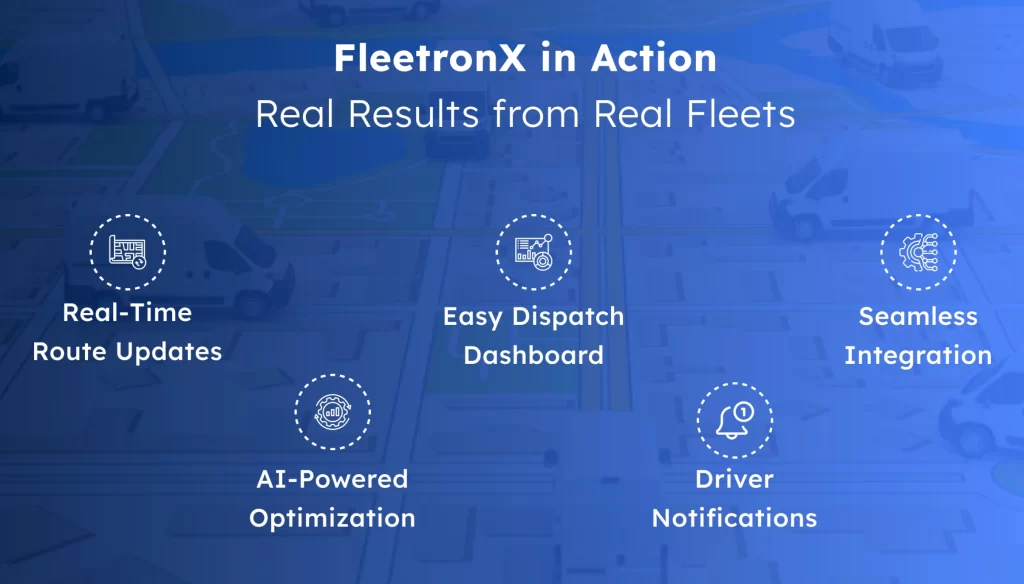
FleetronX in Action: Real Results from Real Fleets
Seeing what dynamic routing is in theory is good, but seeing how it works in practice is even better. Here’s how FleetronX has helped logistics companies improve performance and reduce costs.
City Courier Fleet Cuts Delays by 22%
A courier company faced daily delays due to traffic congestion. FleetronX provided real-time route updates, helping drivers avoid jams. Within three months, the fleet saw 22% fewer late deliveries and happier customers.
Grocery Delivery Company Saves 15% Fuel.
A grocery delivery business struggled with changing orders and tight delivery windows. FleetronX rerouted trucks automatically based on new orders and live traffic. Fuel usage dropped by 15%, and on-time delivery rates went up.
Cold Chain Logistics Improves ETA Accuracy
For a cold chain operator, missed ETAs meant spoiled goods. FleetronX kept routes updated in real time, even when roads were blocked or the weather changed. ETA accuracy improved by 30%, keeping products fresh and customers satisfied.
Conclusion: Smarter Routes, Better Deliveries
Dynamic routing is no longer optional for logistics companies; it’s a must. Static routing might work for simple operations, but it can’t keep up with today’s fast-changing traffic, orders, and customer demands.
By understanding what dynamic routing is and the difference between static and dynamic routing, logistics teams can make better decisions, cut costs, and deliver faster.
With FleetronX, putting dynamic routing into action is simple. Your fleet gets real-time route updates, optimized deliveries, and better ETA accuracy; all in one easy-to-use platform.
Ready to see it in action?
Book a free demo with FleetronX and find out how we can help you save fuel, reduce delays, and improve customer satisfaction.
FAQs About Dynamic Routing in Logistics
What is dynamic routing in logistics?
Dynamic routing is a method of automatically adjusting delivery routes in real time using traffic, weather, and delivery priority data. It ensures faster, more efficient deliveries compared to fixed routes.
Can small fleets benefit from dynamic routing?
Yes. Even small fleets can save time and fuel by using dynamic routing, making deliveries more predictable and efficient.
Can dynamic routing be integrated with existing fleet management systems?
Yes, many dynamic routing solutions are designed to integrate seamlessly with existing fleet management systems. This integration allows for efficient data exchange, ensuring that route optimization aligns with current operations and enhances overall fleet performance.
What industries can benefit from dynamic routing?
Dynamic routing helps many industries, including e-commerce, grocery delivery, healthcare, field services, and public services, by improving delivery speed, efficiency, and reliability.
Is dynamic routing suitable for small businesses?
Absolutely. Small businesses can leverage dynamic routing to optimize their delivery operations, reduce costs, and improve customer satisfaction. Many dynamic routing solutions offer scalable options that cater to the needs of small to medium-sized enterprises.
What is the difference between static routing and dynamic routing?
Static routing follows fixed, pre-planned paths, while dynamic routing adapts routes in real time. Dynamic routing improves efficiency, reduces fuel costs, and helps fleets meet delivery deadlines.
Is dynamic routing suitable for large fleets?
Absolutely. Dynamic routing scales easily to manage complex, multi-vehicle fleets with hundreds of stops efficiently.
How quickly can a fleet implement dynamic routing?
With platforms like FleetronX, fleets can start using dynamic routing almost immediately with minimal setup.
What technology is used for dynamic routing?
Dynamic routing relies on GPS, real-time traffic data, AI algorithms, and fleet management software to optimize routes.
Does dynamic routing work in all types of cities and regions?
Yes. It works in urban, suburban, and even rural areas, adapting to local traffic and delivery conditions.