
What Is a Logistics Information System? A Look Into Its Evolution and Future
Have you ever wondered how goods move smoothly across cities, borders, and even continents? Behind every delivery, there is a system that keeps track of routes, vehicles, and timings without even involving a single human call.
The system is called Logistics Information System(LIS). It is the invisible engine that connects data, decisions, and delivery networks. From planning different routes to tracking shipments, it brings order to what would otherwise be chaos.
But this system did not just appear overnight. It has evolved from paper records to digital dashboards, and now to smart and predictive platforms that are powered by data.
In this blog, we will break down what a Logistics Information System (LIS) really is, how it works, and how it has evolved, along with its prospects. By the end of this guide, you will be able to understand how technology is not just managing logistics anymore, but rather it is redefining it.
You’ll also see how FleetronX is redefining logistics with intelligent automation and connected systems that integrate seamlessly with solutions like a logistics management system and transportation management system, making logistics smarter than ever.
What is a Logistics Information System?
A Logistics Information System (LIS) has turned out to be the digital backbone of modern logistics. It is a system that collects, stores, and shares information related to the movement of goods.
In simple terms, it is a system that helps logistics teams know what is moving, where it is moving, and when it will arrive. The LIS connects data from warehouses, fleets, suppliers, and customers and turns the scattered details into a single, clear picture.
This can be understood as a control room for logistics operations. Every vehicle, shipment, and order sends information to the system in real time. Managers can easily see routes, delays, and delivery status all in one place.
A good logistics information system does a lot more than show data. It helps businesses to plan routes, assign vehicles, predict demand, and even reduce costs. It transforms the logistics from manual coordination to data-driven decision-making.
Without an LIS, logistics teams would rely on guesswork. With it, they operate with confidence, control, and deep visibility, especially when integrated with solutions like delivery management software or route optimisation software for seamless coordination and planning.
Why Logistics Information System Matters
While talking about logistics, the most crucial component is timing. One delay, or one missed update, and the entire chain can fall apart.
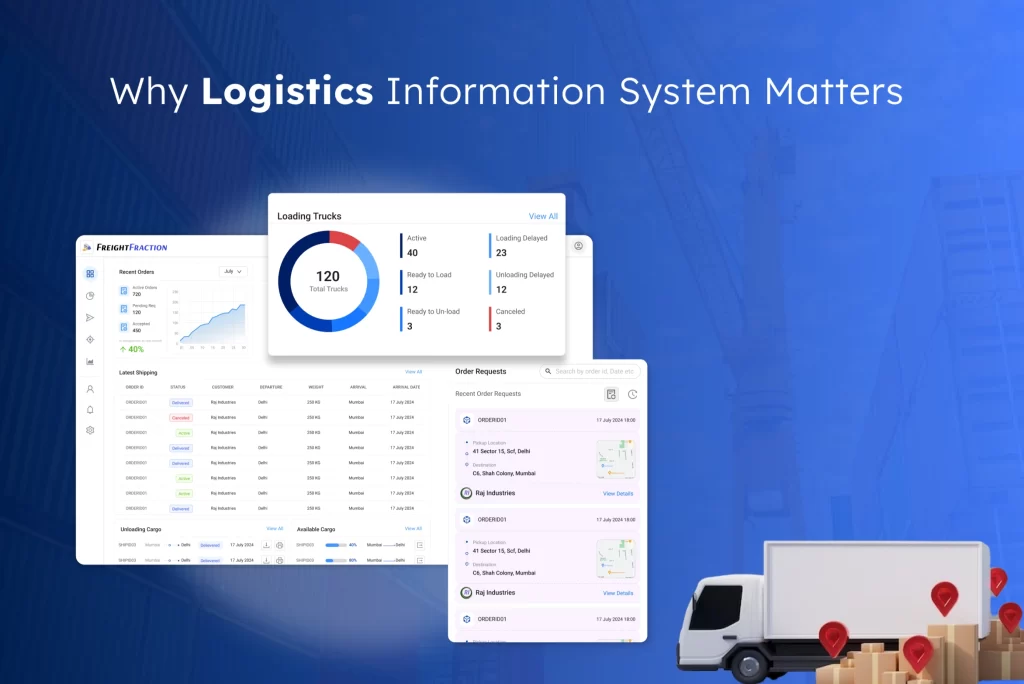
That is where the Logistics Information System makes a difference. It keeps every link in the supply chain connected and informed. With this system in place, logistics teams do not just react rather they anticipate. They know when a vehicle is running late, where the shipment is stuck, and what route will help in saving time and fuel.
For transport managers, this means fewer surprises and more control. For businesses, it means smoother operations and customer satisfaction. A strong LIS can help in bringing visibility at every step of the transportation journey. It turns complex tasks into clearer insights that help companies cut costs, along with improving delivery, accuracy, and planning.
It also supports key operations such as last-mile logistics and online shipment tracking software by providing constant visibility from the warehouse to the doorstep.
In short, this system helps to make logistics smarter, faster, and more reliable. And in a world where speed defines success, this is what truly matters.
Key Components of a Logistics Information System
A Logistics Information System is not just one single tool; rather, it is a collection of systems that work together to manage every step of the logistics chain.
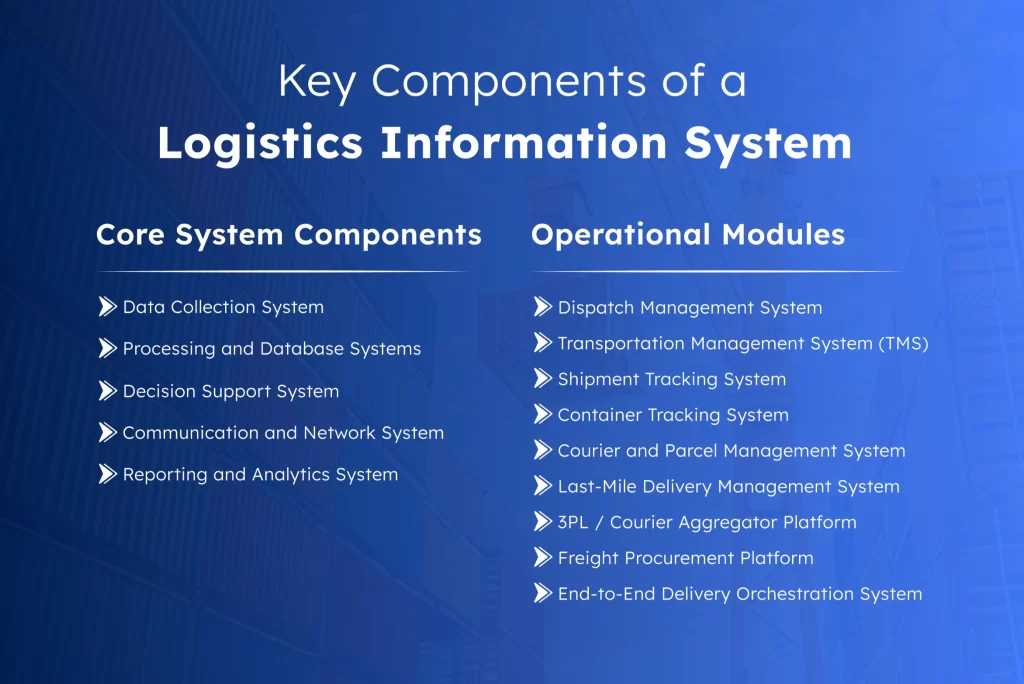
Broadly, these components fall into two groups: the core structure and the operational modules that are used in daily logistics work.
Core System Components
These components make up the technical foundation of an LIS. They manage how data flows, is processed, and shared across the network.
Data Collection System
This is the component that captures the real-time information from fleets, warehouses, and delivery points.
Processing and Database Systems
A place where all the data is stored and organised for easy access and analysis.
Decision Support System
This is a system that supports the logistics team to turn raw data into clear insights that help with faster decisions.
Communication and Network System
A system that ensures seamless sharing of data between drivers, hubs, and control centers.
Reporting and Analytics System
A place where logistics data is transformed into dashboards and reports that improve planning and performance.
Operational Modules
Depending on what a business needs to manage or automate, an LIS can include several functional modules, such as:
Dispatch Management System
Container Tracking System
Courier and Parcel Management System
3PL / Courier Aggregator Platform
Freight Procurement Platform
End-to-End Delivery Orchestration System
Each of these modules adds a unique layer of control and visibility while managing logistics. Together, they help to create a connected, data-driven ecosystem that helps to keep logistics smooth, transparent, and more efficient.
| Module Name | Purpose / Function |
|---|---|
| Transport Management System (TMS) | Plans, executes, and optimizes transportation operations from route design to delivery tracking. |
| Last-Mile Delivery Management System | Ensures fast, accurate deliveries to the customer’s doorstep with real-time visibility. |
| Shipment Tracking System | Monitors shipments across the supply chain and provides live status updates. |
| Freight Procurement System | Manages rate contracts, bid processes, and carrier selection for cost-efficient freight movement. |
| Container Tracking System | Tracks container locations across ports and routes for better visibility in global logistics. |
| End-to-End Delivery Orchestration System | Connects all delivery stages from dispatch to drop-off on one integrated platform. |
| Dispatch Management System | Automates driver assignments, route planning, and delivery scheduling. |
| Courier and Parcel Management System | Handles high-volume parcel movements, returns, and customer notifications efficiently. |
| 3PL / Courier Aggregator Management System | Integrates multiple logistics partners or carriers into one unified dashboard for smooth coordination. |
Benefits of Logistics Information Software
A Logistics Information System isn’t just a tool. It is a system that helps logistics teams work smarter, faster, and with more control.
Here are some of the biggest benefits it brings:
Real-time Visibility
It is possible to know exactly where every vehicle, shipment, or container is at any time. This transparency helps to prevent delays and improve customer confidence.
Better Decision-Making
With the accurate data in one place, it becomes easy for logistics teams to make faster and smarter decisions. From rerouting trucks to adjusting schedules, decisions are backed with real insights.
Improved Efficiency
Automation replaces repetitive manual work. Tasks like dispatching, tracking, and reporting take less time and involve fewer errors.
Cost Reduction
Optimised routes help to lower the fuel costs and even reduce the idle hours, which leads to direct savings. LIS helps to identify waste and control expenses across different operations.
Enhanced Customer Experience
Accurate ETAs, instant updates, and on-time deliveries build trust. Using LIS helps to keep customers informed and satisfied.
Stronger Collaboration
By connecting fleets, warehouses, and managers through a unified supply chain management software, an LIS ensures everyone works with the same information, improving coordination and communication.
Data-Driven Planning
Historical data helps forecast demand, spot patterns, and plan resources better. This leads to smarter business growth and scalability.
In short, a Logistics Information System gives companies the clarity and control they need to manage complex logistics operations and scale them with confidence.
How Logistics Information Systems Are Transforming Modern Transport
Transport operations these days have turned out to be more complex than ever. From managing routes to tracking deliveries on time, there is no chance of managing all of this through guesswork like before.
That is where the Logistics Information System steps in, helping turn raw data into real action. It gives transport managers complete visibility over every vehicle, shipment, and route.
Instead of reacting to delays, logistics teams can actually predict and prevent them. They can see when a vehicle is off track, reroute it instantly, and even update the customers using the single dashboard.
An LIS also helps to make resource use smarter. It helps to reduce fuel consumption, optimize delivery schedules, and manage drivers’ performance, which directly helps to reduce costs. And because every trip is tracked and analyzed, companies gain insights they can use to plan better for the future.
In short, logistics information systems are reshaping transport into a connected, data-driven network, one where every move is visible, measurable, and optimized for efficiency.
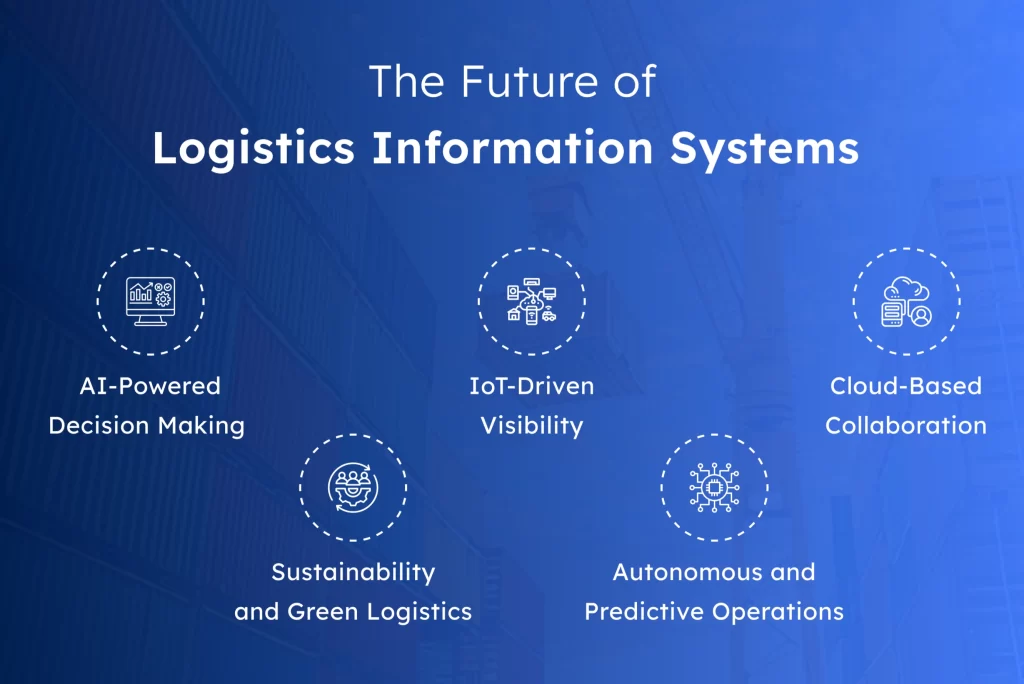
The Future of Logistics Information Systems
The future of logistics is intelligent, connected, and sustainable. Here’s how logistics information systems are shaping up for the years ahead:
AI-Powered Decision Making
Artificial intelligence will automate route planning, load optimization, and delay management. Systems will predict issues before they occur and make instant corrections.
IoT-Driven Visibility
Connected sensors will track vehicles, containers, and goods in real time. This constant data stream will help to boost transparency and cut response times.
Cloud-Based Collaboration
Cloud platforms will connect carriers, shippers, and logistics partners under one system. Information sharing will become seamless, improving coordination across regions.
Sustainability and Green Logistics
Future systems will optimize routes and fuel use to lower emissions. Data insights will help companies make eco-friendly transport choices.
Autonomous and Predictive Operations
From self-learning software to driverless logistics, automation will redefine how transport runs. Human effort will shift from managing tasks to managing intelligence.
In short, the future of LIS isn’t just about moving goods; rather, it’s about building a smarter, cleaner, and more connected logistics ecosystem.
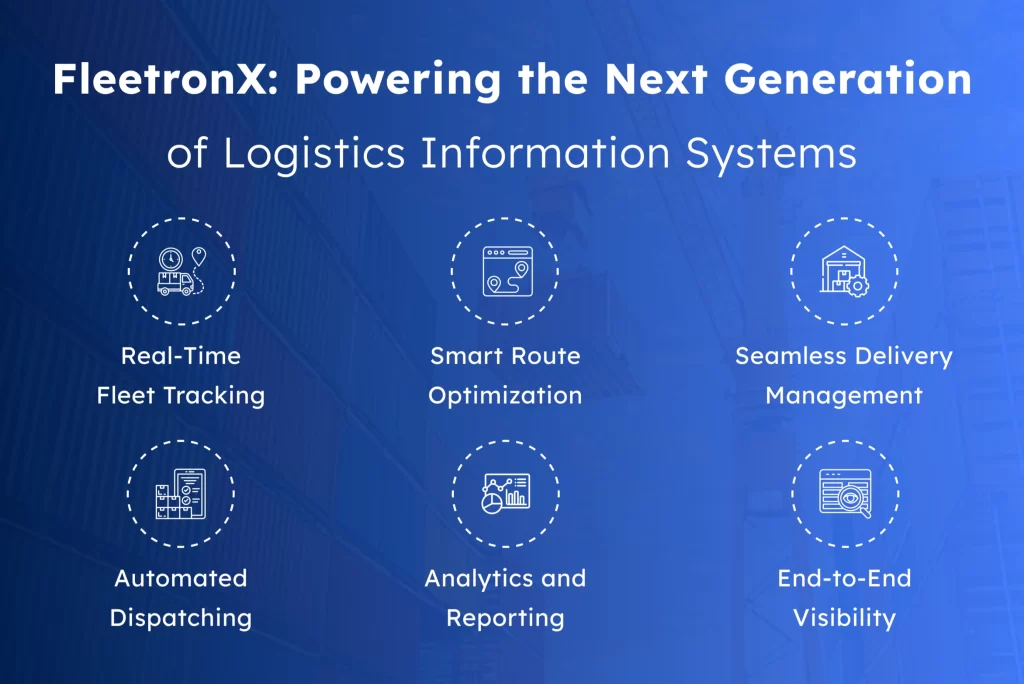
FleetronX: Powering the Next Generation of Logistics Information Systems
At FleetronX, innovation meets intelligence. Our advanced Logistics Information System is built to simplify transport management and help businesses take full control of their logistics operations. Whether you manage a large fleet or multiple delivery partners, FleetronX brings everything under one smart platform.
Here’s what makes it stand out:
- Real-Time Fleet Tracking: Know where every vehicle is, anytime. Get instant alerts for delays or route changes.
- Smart Route Optimization: Plan the most efficient routes automatically and save on time and fuel.
- Seamless Delivery Management: Manage first, middle, and last-mile deliveries from one dashboard.
- Automated Dispatching: Assign the right vehicle for every job with AI-based dispatching and scheduling.
- Analytics and Reporting: Turn data into insights with powerful dashboards that help you plan and scale.
- End-to-End Visibility: From dispatch to delivery, FleetronX keeps every step connected, transparent, and efficient.
With FleetronX, logistics teams don’t just manage transport, they master it. The platform helps reduce costs, improve delivery speed, and enhance customer experience, all while giving you real-time control and clarity.
FleetronX is redefining how logistics information systems work, making them faster, smarter, and built for the future.
Let’s Wrap It Up!
The logistics world is changing faster than ever, and information is now its strongest engine. A well-built Logistics Information System gives companies the power to see more, plan better, and deliver faster.
From tracking fleets in real time to predicting delays before they happen, LIS has turned logistics from a reactive process into a proactive, data-driven operation. As technology continues to evolve, businesses that embrace intelligent systems will lead the way, building operations that are faster, smarter, and more sustainable.
FleetronX is already helping logistics teams take that leap. With powerful automation, deep visibility, and data-driven insights, it’s shaping the future of how transport moves. The future of logistics belongs to those who think ahead, and with FleetronX, that future is already here.
Common Questions About Logistics Information System
What is a Logistics Information System (LIS)?
It’s a software ecosystem that captures, processes, and shares logistics-related data (fleet movements, shipments, deliveries) so companies can make smarter, faster decisions.
Can an LIS integrate with existing systems (ERP, TMS, WMS)?
Yes. Modern LIS platforms are designed to plug into ERPs, TMS/WMS, and partner networks, making data flow smoother and reducing silos.
How do I choose the right LIS for my business?
Look for scalability, integration capabilities (with fleets, warehouse, clients), real-time visibility, user-friendly dashboards, and strong support.
Is data security important for an LIS?
Absolutely. Since logistics data involves vehicles, routes, clients, and cargo, an LIS must offer secure access, encryption, role controls, and audit trails.
What size business can use an LIS?
From smaller fleets to large transport networks, LIS works at any scale. The key is choosing a system modular enough to grow with you.
How do I measure return on investment (ROI) for an LIS?
Metrics include reduction in empty miles, lower fuel costs, improved on-time delivery, fewer delays/claims, and better customer satisfaction.
How does an LIS improve transport and fleet operations?
By providing live data on vehicles, routes, and shipments, it allows transport teams to reroute, schedule, and respond faster, improving reliability and lowering costs.